NET-Y-U
A conceptual AI-enhanced platform that makes network and career goals come to reality.
How might we help NYU Graduate students build cross-departmental relationships with students and faculty in other disciplines to broaden their academic and professional perspectives?
Role
Lead UI/UX Designer, UX Researcher
Group Members:
Srishty Bhavsar (Designer), Lourdes Keochgerien, George Wang, Kathy Laguerre
Tools
Figma, Figjam, Google Form
Duration
Group: 12 weeks
Individual: 8 weeks
Class
User Experience Design - New York University
Design Solution
A personalized networking platform for NYU graduate students designed to help them build cross-departmental relationships across disciplines efficiently.
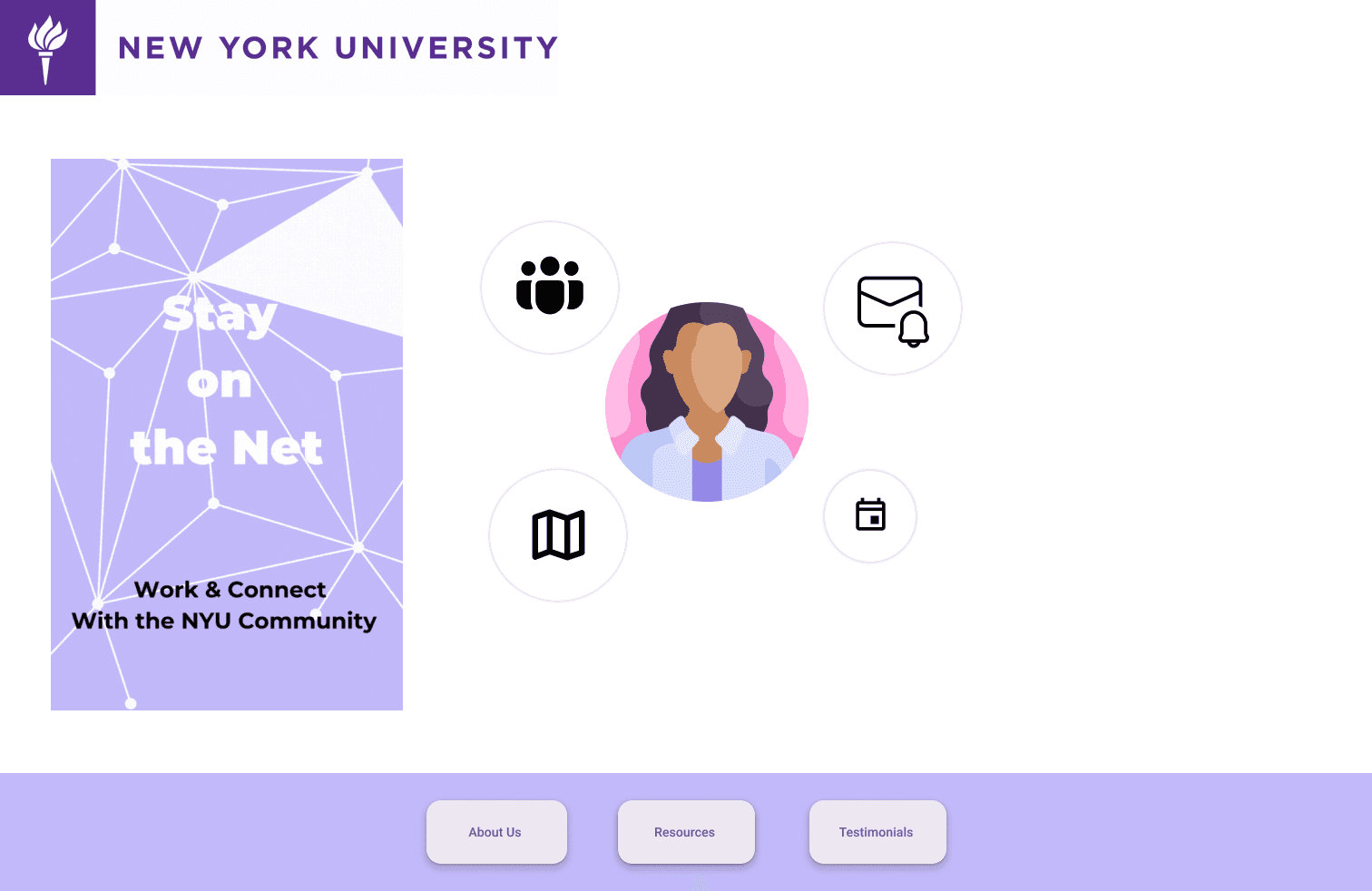
A. The Net-Y-U landing page is bold and showcases the primary purpose of the platform with an emphasis on multidisciplinary networking across NYU majors. Through the landing page of the site, users can log in with their NYU ID.
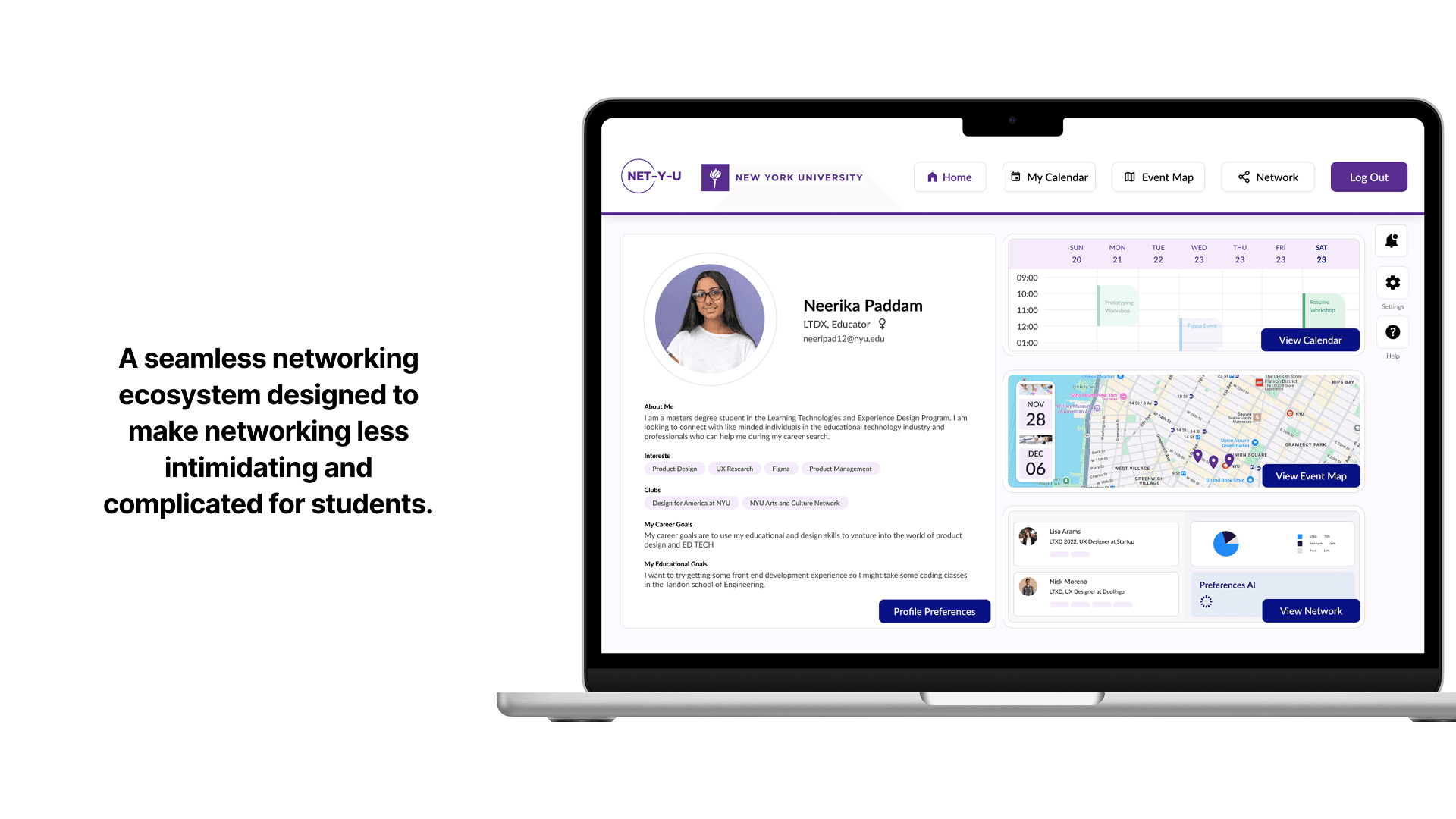
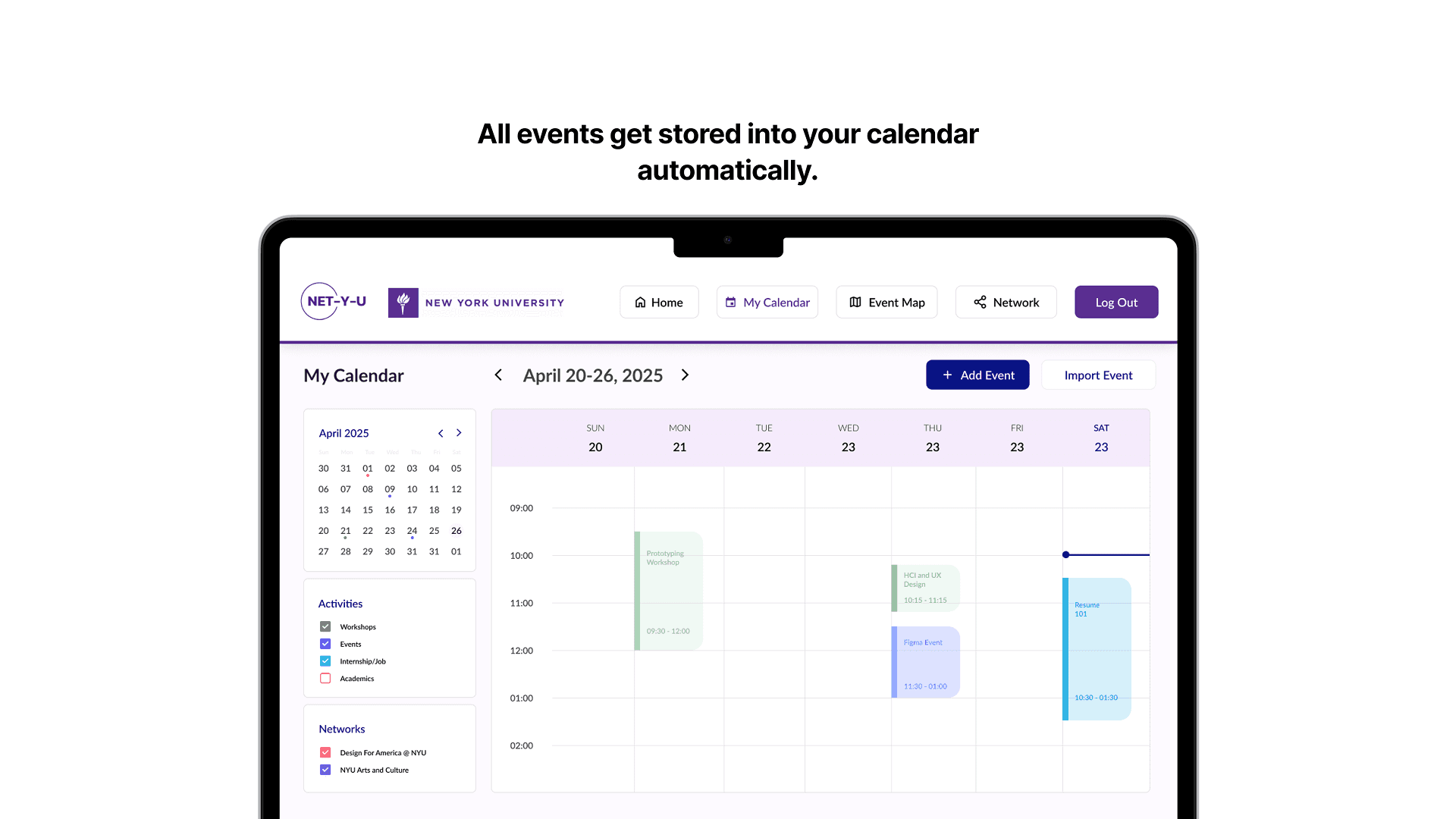
B. As users log in to the platform, they are first met with the home page dashboard, where they can access various networking portals: calendar, event map, network, and profile preferences. The dashboard allows users easy access to navigating the platform and helpful previews of the user's activity.
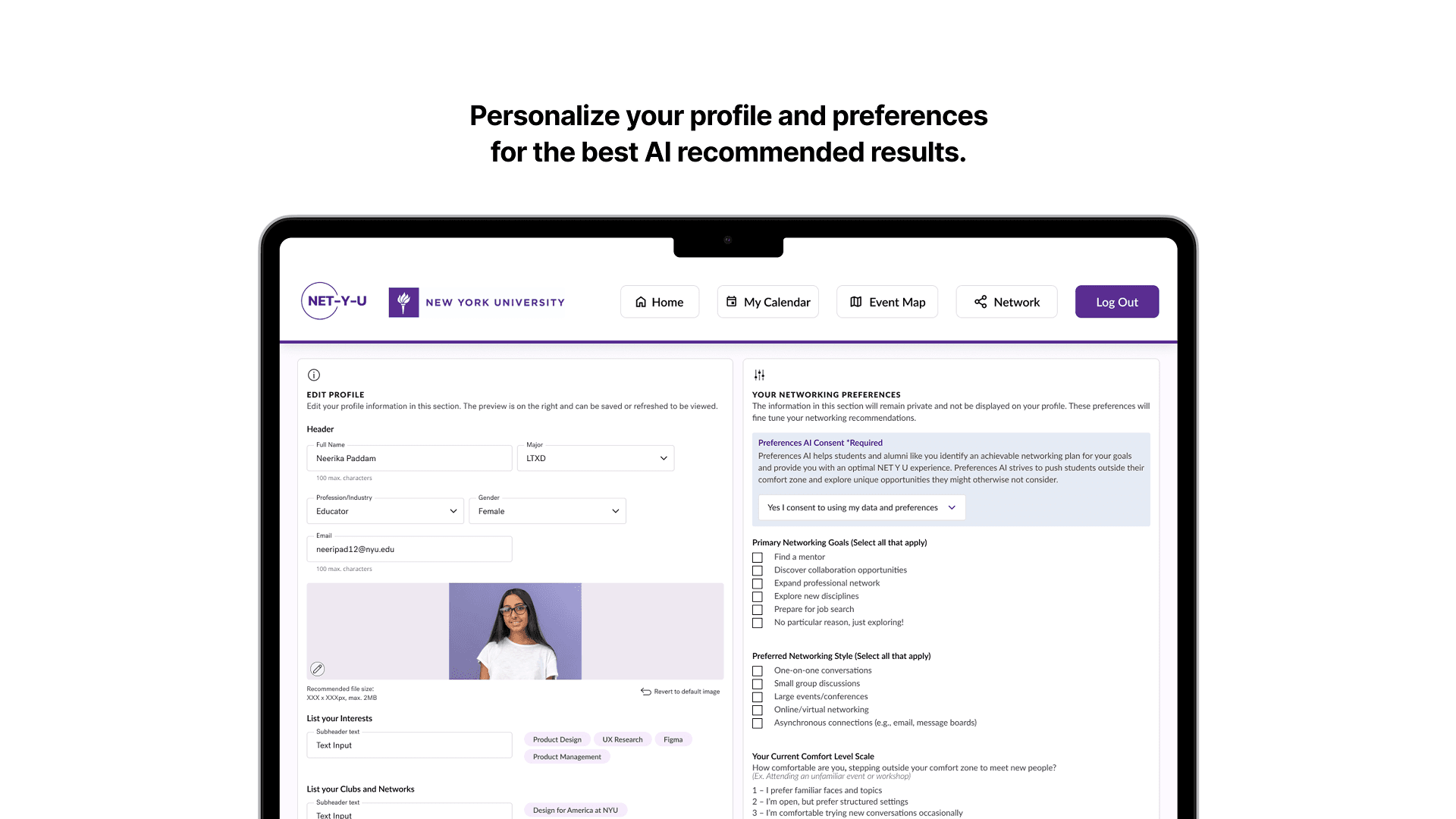
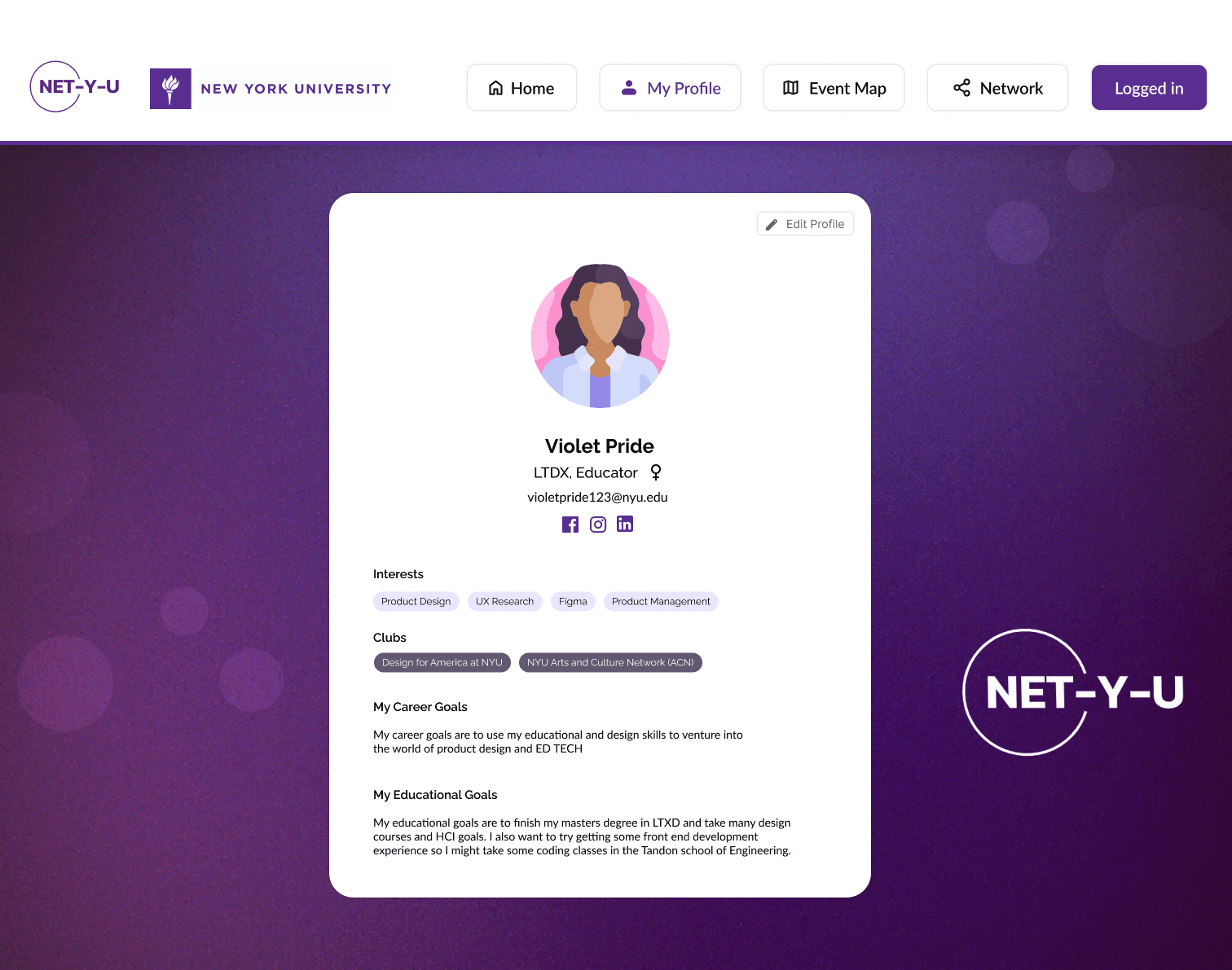
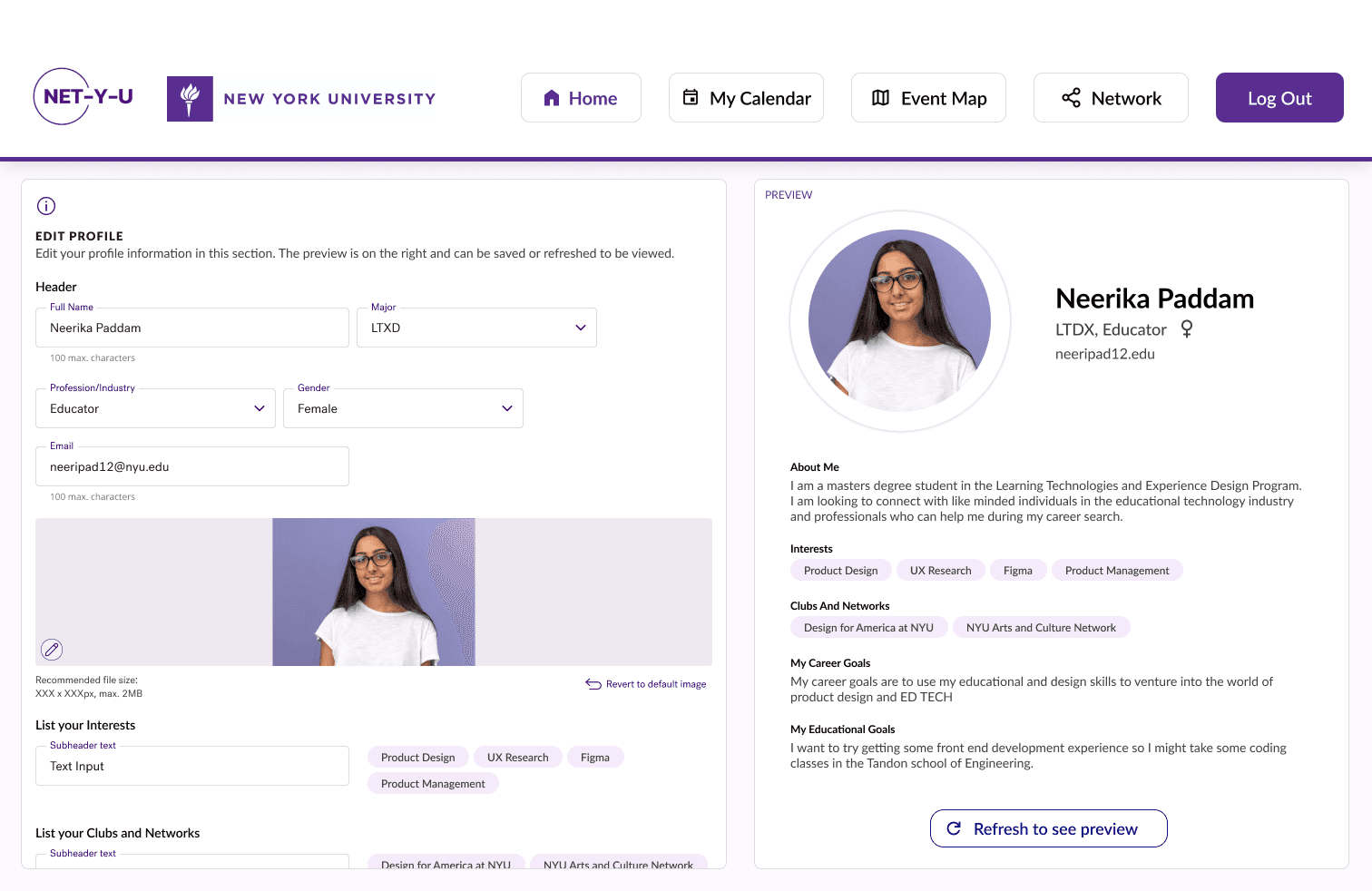
C. The profile preferences page allows users to edit their basic profile information. This profile information is showcased publicly to other students using the platform.
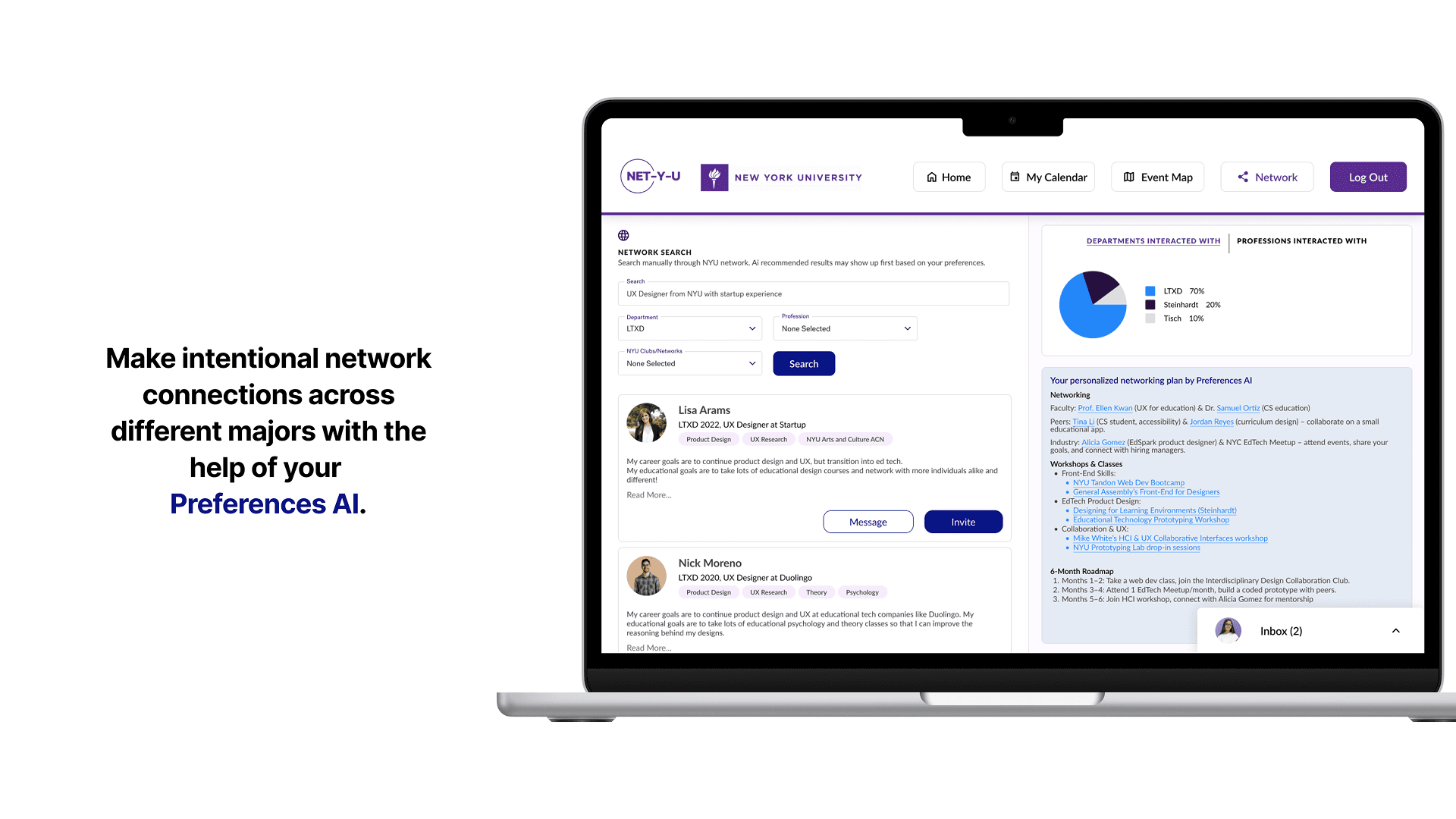
D. On the same profile preferences page, users have the option to additionally utilize "Preferences AI" to fine-tune their networking recommendations. While Preferences AI collects data about the user's networking preferences, all users are prompted with an option to consent to it or not. In addition, all data remains private to the user and is not displayed within their individual profile.
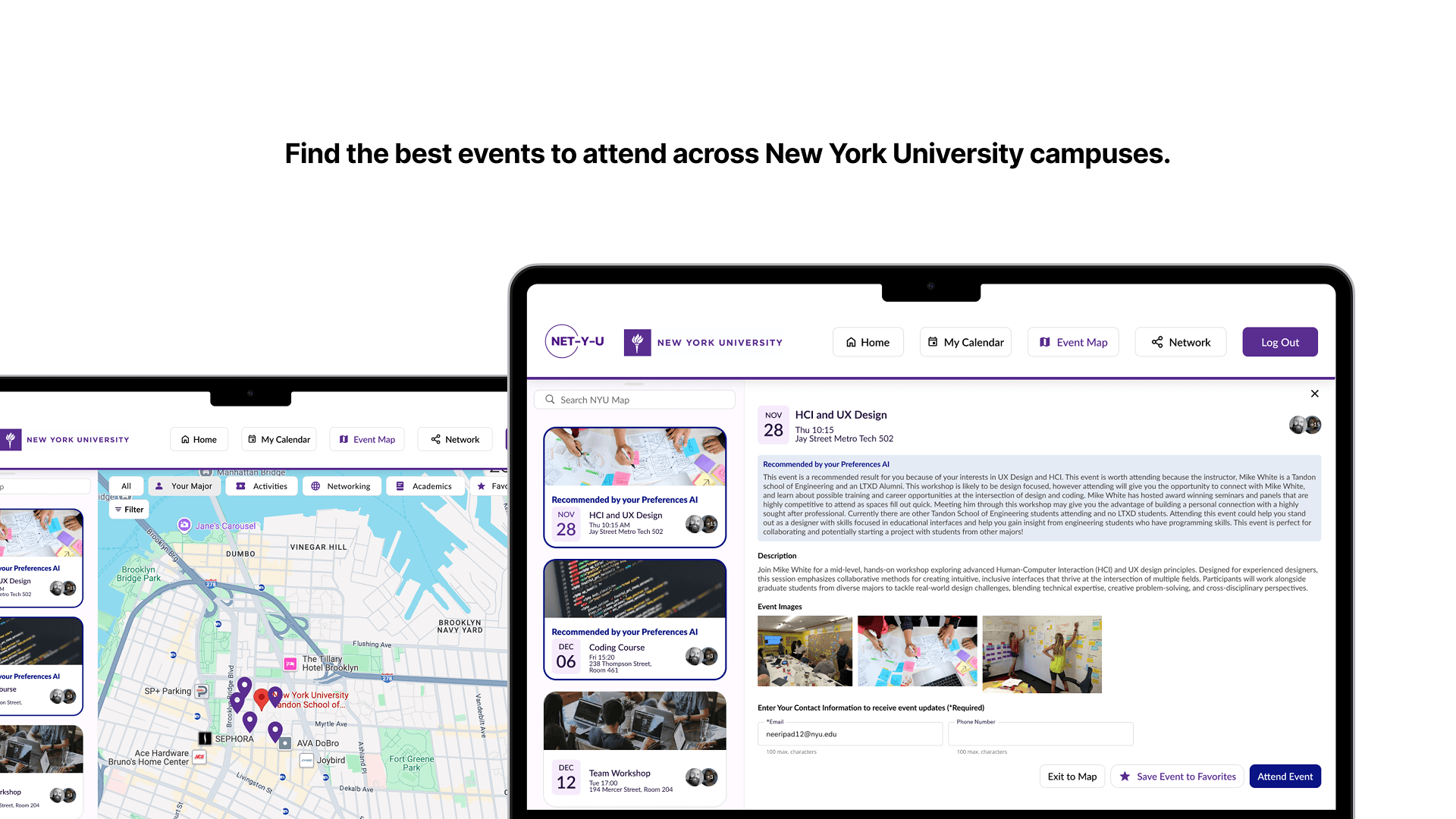
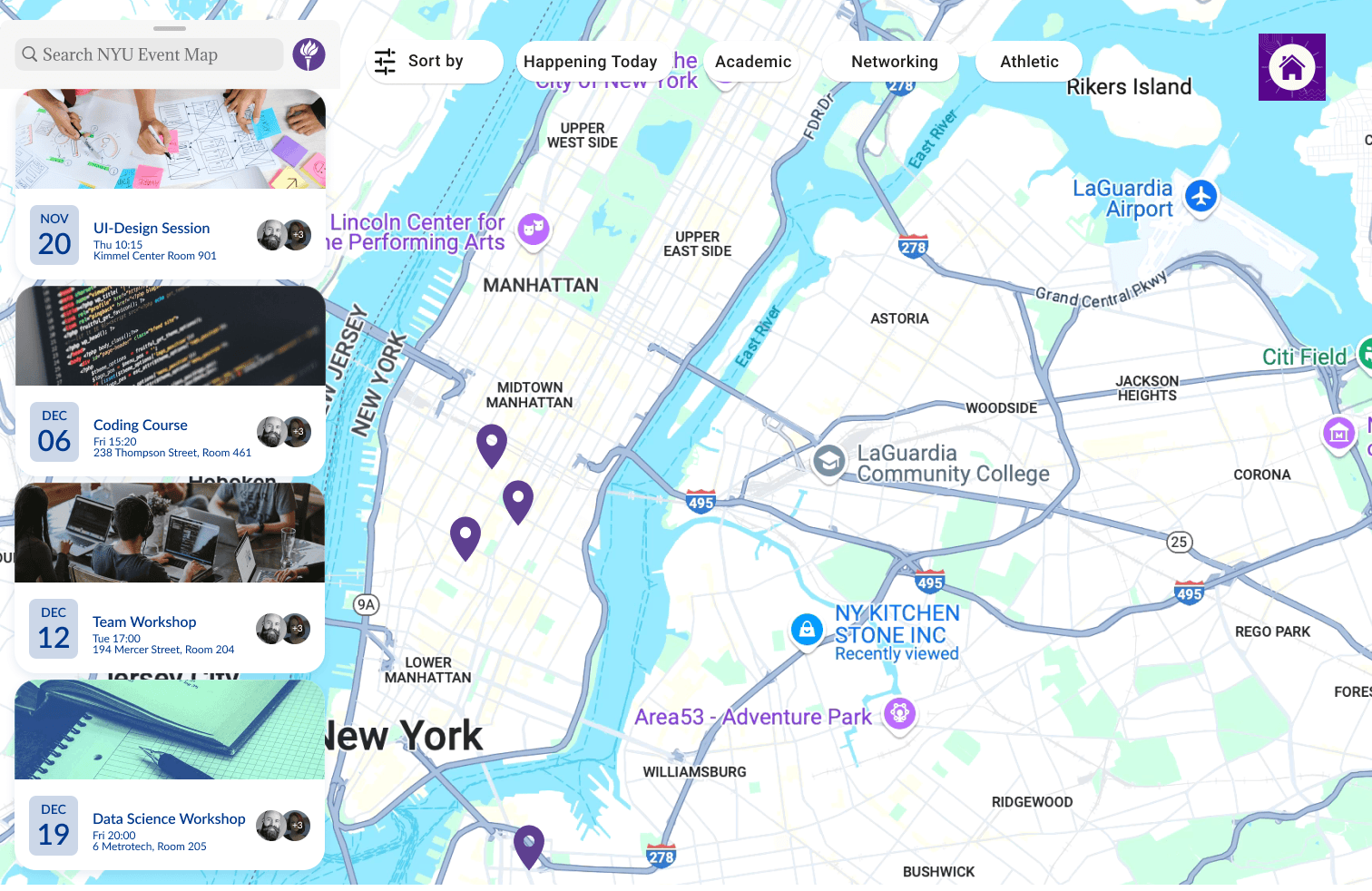
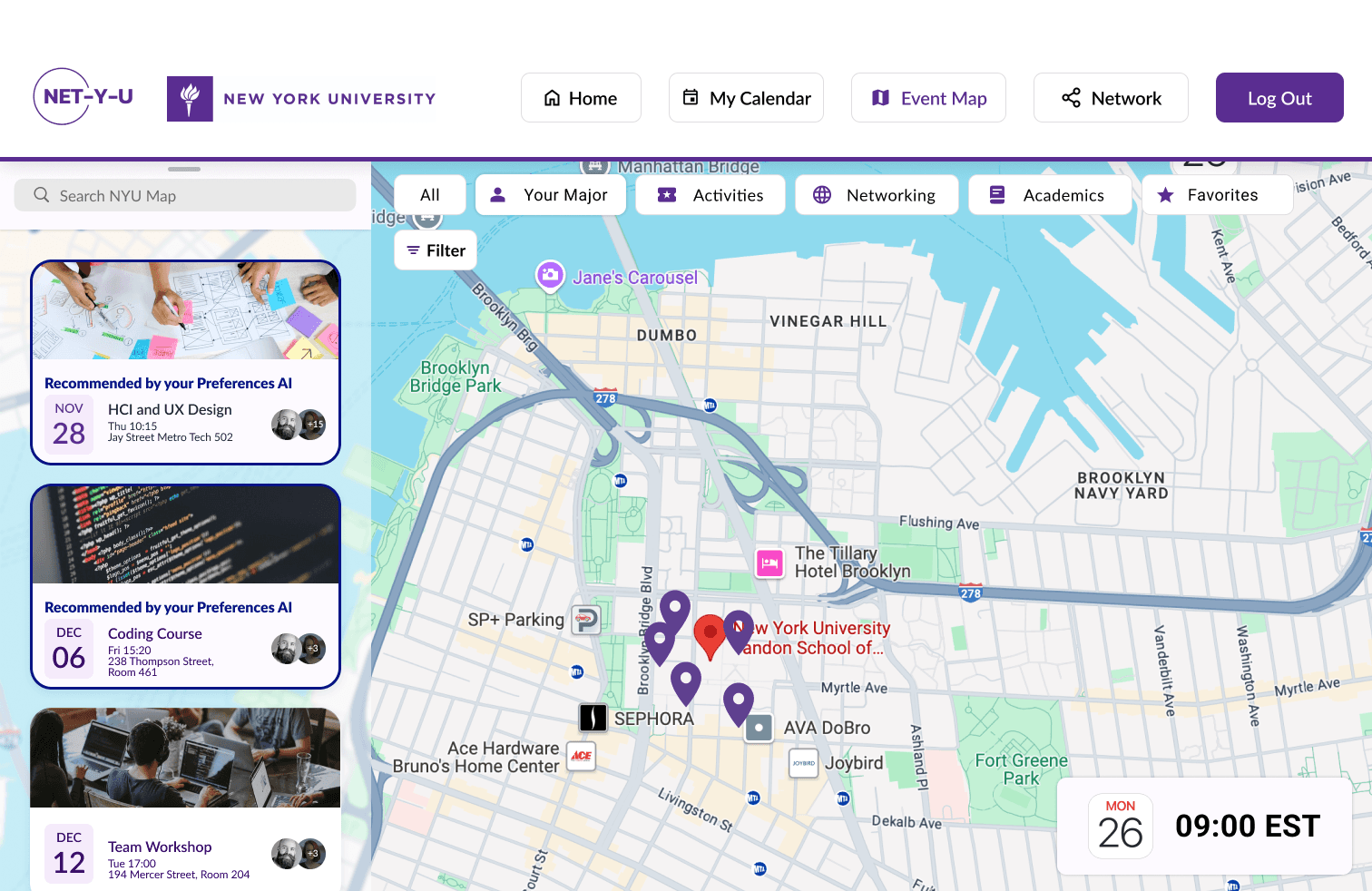
E. On the events map page, users can view the nearby networking events across the NYU campuses. Events highlighted in blue indicate that an event is recommended based on their Preferences AI. Users can use the filter tool and map tabs to fine-tune their event results.
F. When users click on an event, they can read specific details about why the event is a good fit for them based on their Preferences AI. Users can also view basic descriptions about the event and view who else is attending the event. When the user clicks "Attend Event," the event is saved to their calendar portal.
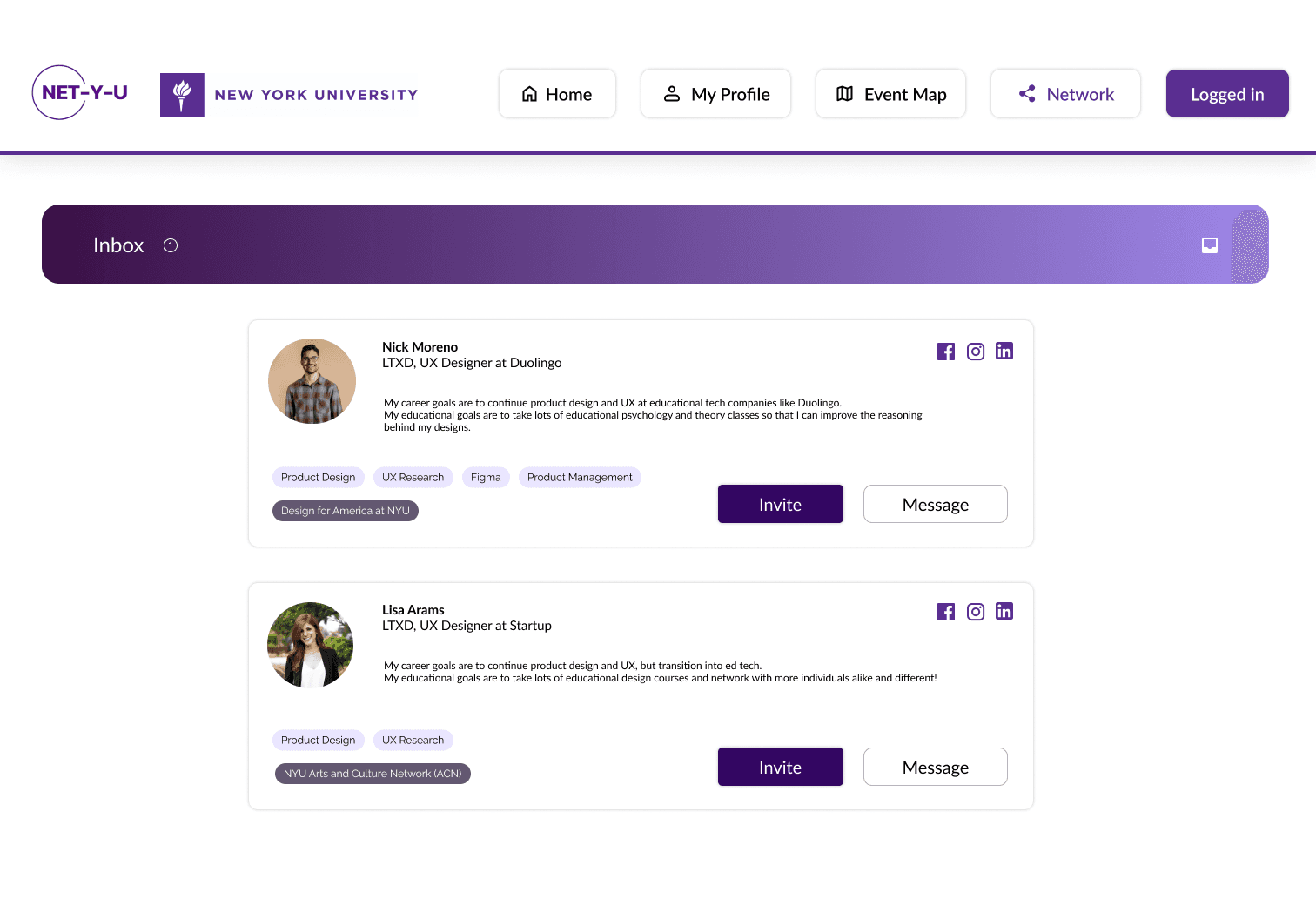
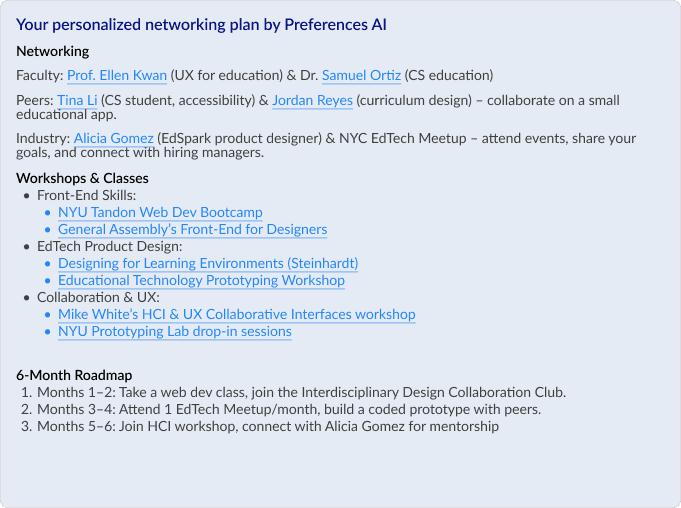
G. On the networking page, users can view basic data about their network interactions based on their activity. Preferences AI provides users detailed networking plan based on their preferences, with network, event, and roadmap recommendations. Users can search for students and alumni to network with through the "Network search."
Problem
NYU graduate students feel isolated within their major due to a lack of interdisciplinary career and cross-departmental networking opportunities.
NYU currently has a networking website called “NYU Engage” which has some existing networking features. But they are limited, unorganized, generic, and do not allow NYU students to personalize their networking results.

Current Networking Platform “NYU Engage”
Research
Interviews
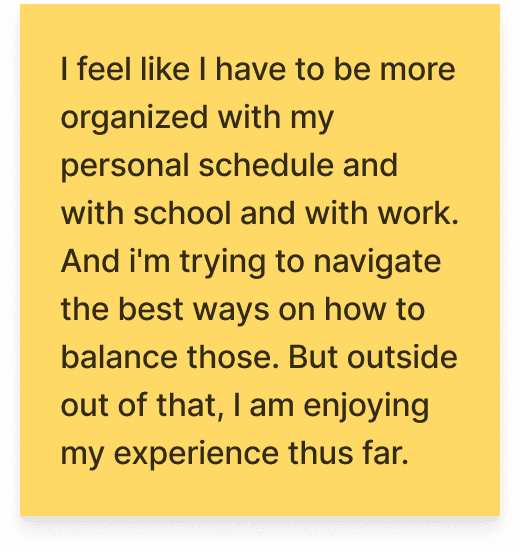
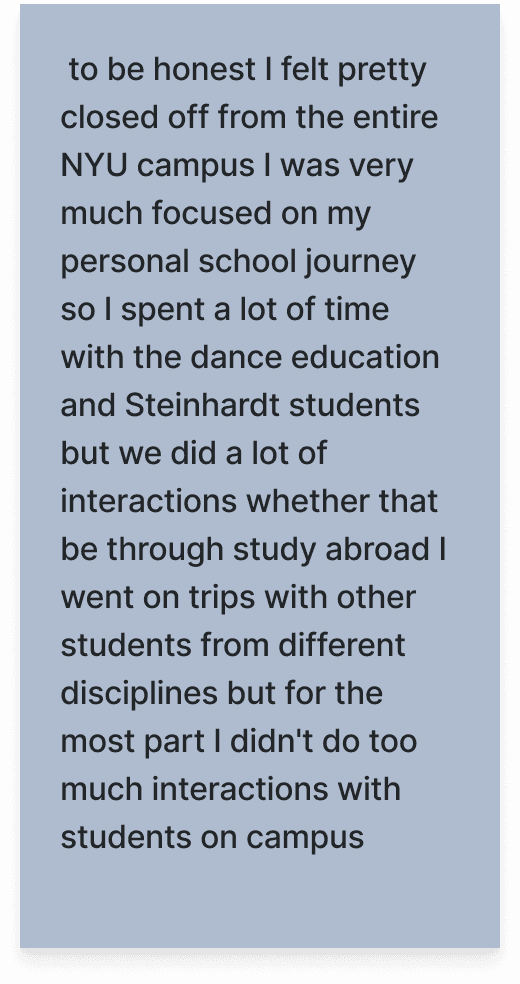
We first conducted 5 user initial user interviews amongst NYU graduate students about their experiences balancing their job and school. We learned that most NYU students interact with students within their classes however feel isolated from the rest of the NYU campus. In addition, some students expressed its difficult to balance their work life, personal life, and school life.
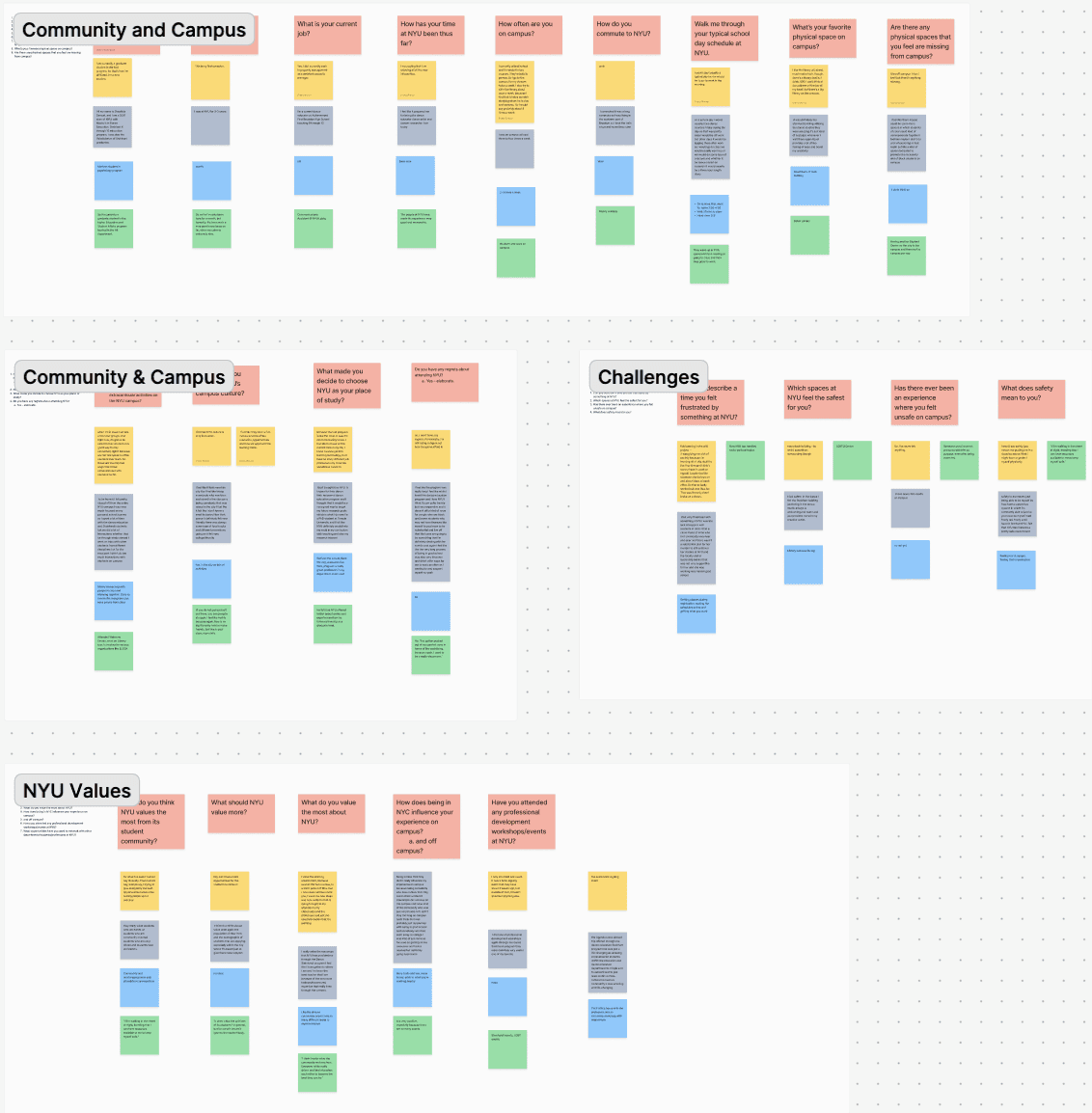
Affinity Diagram of User Interview Responses

User Personas
The first persona is based on the qualitative data about being a graduate working student that was found from the user interviews and the free response section of the survey. The second persona is primarily based on the qualitative and quantitative data results of the survey. The designs of Net Y U were ultimately informed by the insights analyzed through the goals and challenges of these user personas.

Qualitative User Persona

Quantitative User Persona
Insights
1
Students want to network outside their own program:
2
Students feel distant and secluded amongst other programs
3
Cross-department interaction is difficult across different NYU campus building locations.
Survey Quote
Survey Data
Interview Quote
Ideation
The screens we ideated upon were ultimately driven by our insights through sketches and low-fidelity prototypes.
The profile page addressed students wanting to network outside of their program as it allows students to customize their profile and tailor their networking recommendations. (Insight 1)
The events page addressed students that felt secluded amongst other programs as it allows them attend the best networking events based on their preferences. (Insight 2)
The networking page addressed students finding difficulty interacting wit different departments because they were located across different campus locations. The page allows students to view a wide network of students and alumni from different majors, campuses, and locations. (Insight 3)



Testing
The usability testing feedback from our low-fidelity design iterations indicated clearly that the prototypes were not intuitive enough to effectively address user needs.
Lo-Fidelity User Testing Feedback
"[Persona 1 wants to] build connections with people in the NYU network that will help smoothen his transition [in making a career change]"
While our screens provided networking opportunities, the interface was not clear in facilitating advice for career development and changes,
"[Persona 2] wants to connect with students in different majors, especially the arts and media."
The screens additionally did not facilitate the intended behaviors of interdisciplinary exploration. Our team had not finished designing a profile screen that allowed users to personalize their profile and preferences nor a networking screen that allows students to browse a catalog of NYU students and alumni in the network.
KEY FEEDBACK
"I think this product currently prioritizes the literal design of network nodule bubble shapes over the simplicity, accessibility, and intuitiveness that a networking platform should showcase." - Product Designer at Linkedin/Slack
As I worked independently on mid-fidelity prototypes, I sought feedback from a professional designer at a major networking company as well as a previously interviewed student to review the visual design and user experience of the prototype screens. All of the feedback for each screen is available in detail below.
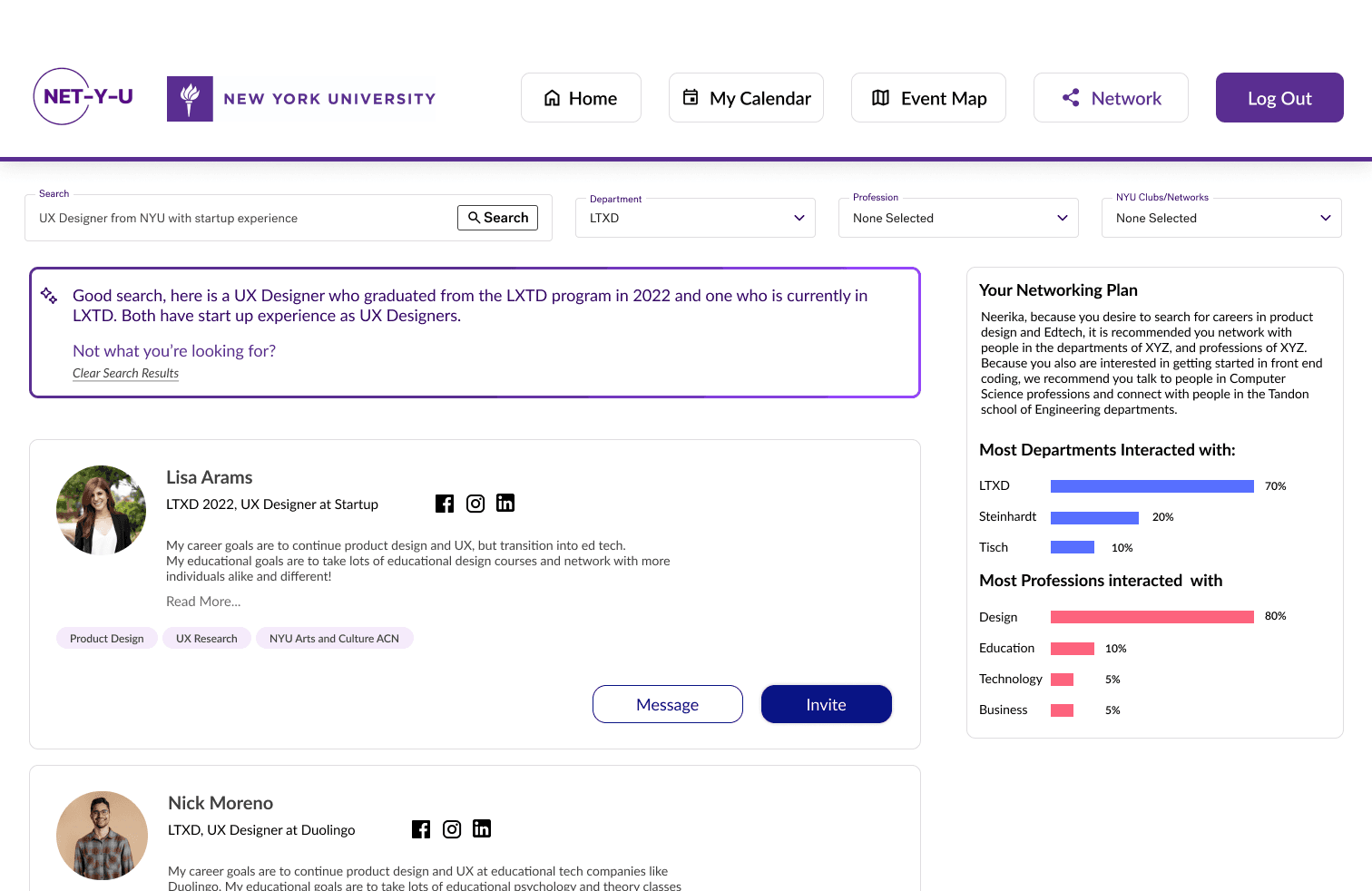
1. Networking Page Feedback
2. Profile Page
3. Event Map Feedback
4. Home Page Dashboard Feedback
Final revisions
"If I were to network using AI. I would use AI to give me recommendations first and then potentially manually search second." - NYU Graduate Student in Psychology
Using the feedback, I worked through every feedback to identify the changes required to to accomplish the desired outcomes. The flows below are examples of specific design features that served to target each problem addressed.
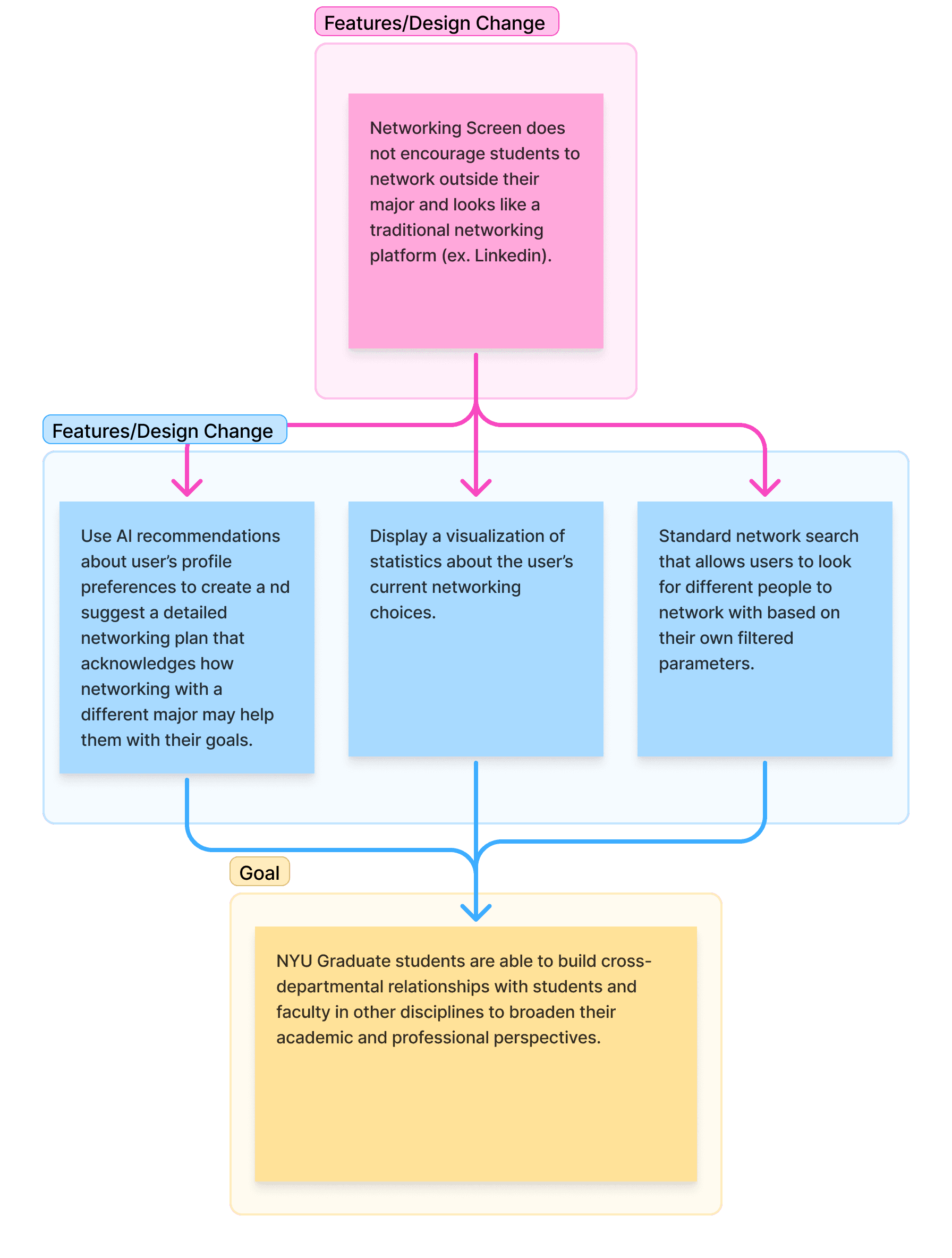
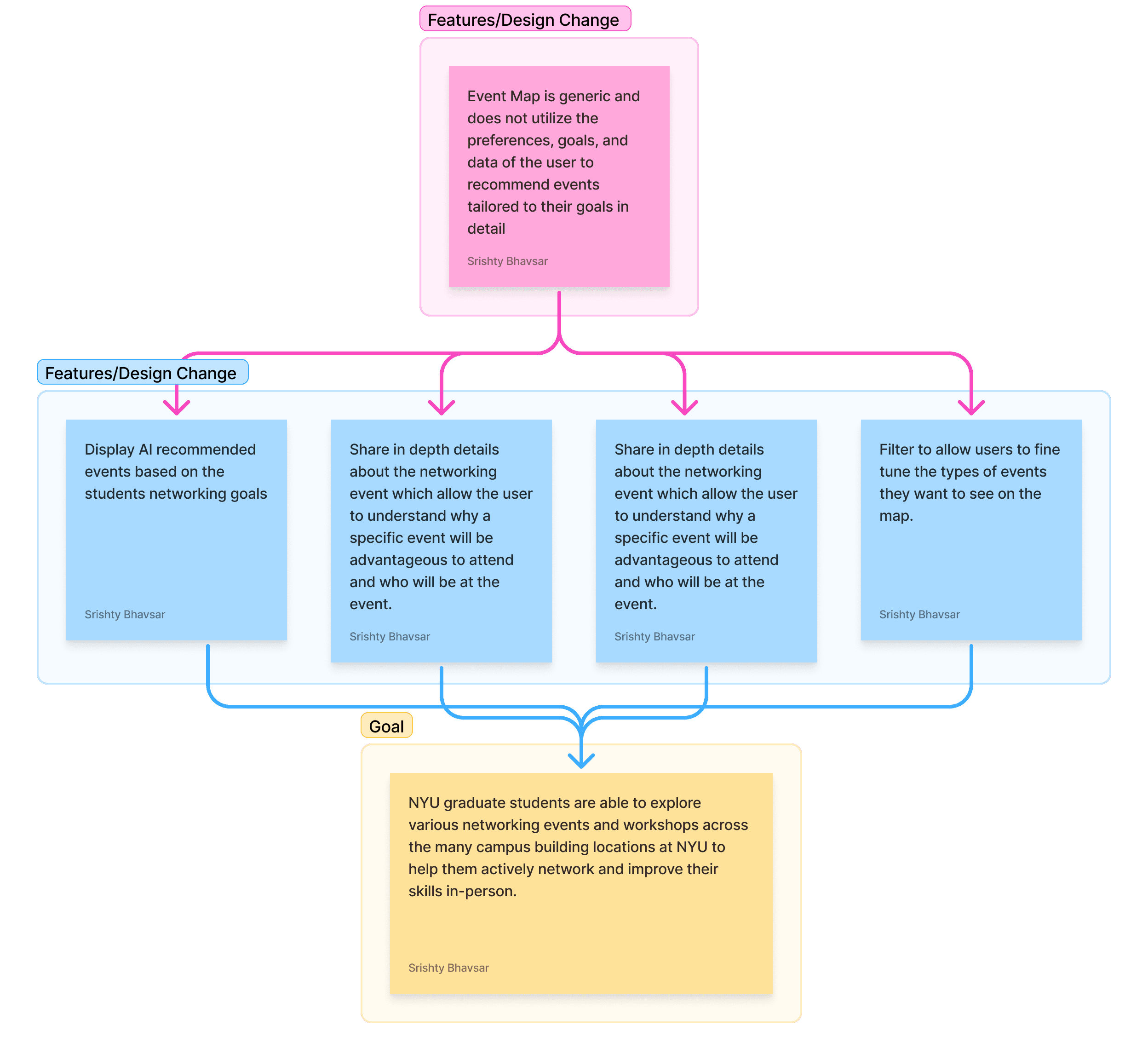
the AI explained
The use of AI in the networking platform was ultimately decided for a more personalized, precise, and efficient user experience. Based off the key feedback on my mid-fidelity prototypes, my users desired an intentional incorporation of AI. Based on the student's consent to share their preferences, Preferences AI is able to explain which networking and events to attend, and why it matches their networking goals. It additionally serves to create a detailed networking plan that assists students in building an intentional network based on their previously selected preferences.
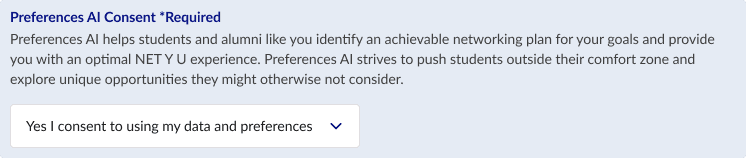

Design System
"To me, the best visual design approach to a networking platform should be to finish the practical information architecture and then think about building a consistent design system that is visually playful without being excessively literal." - Product Designer at Linkedin/Slack
The feedback made it clear that the redesign of the product would require visual consistency in order to make the interface intuitive to users. As a result, I created a basic design system that allowed me to ensure consistency, modularity, and organization within the final prototype design of my product.

Prototype
Up Next
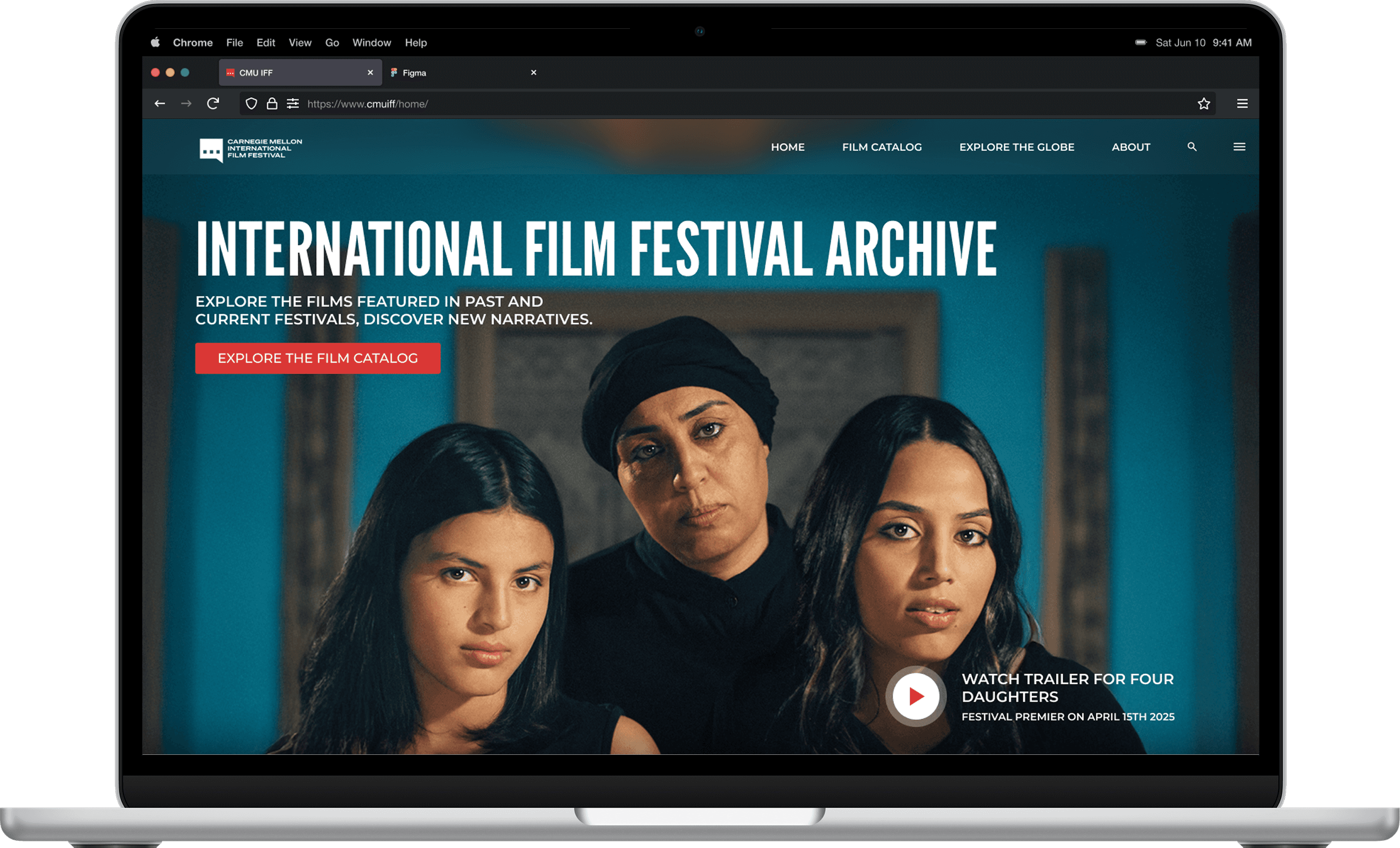
Archive interface for an international film festival.
Client Design
Interactive Experience Design
Cultural Immersion


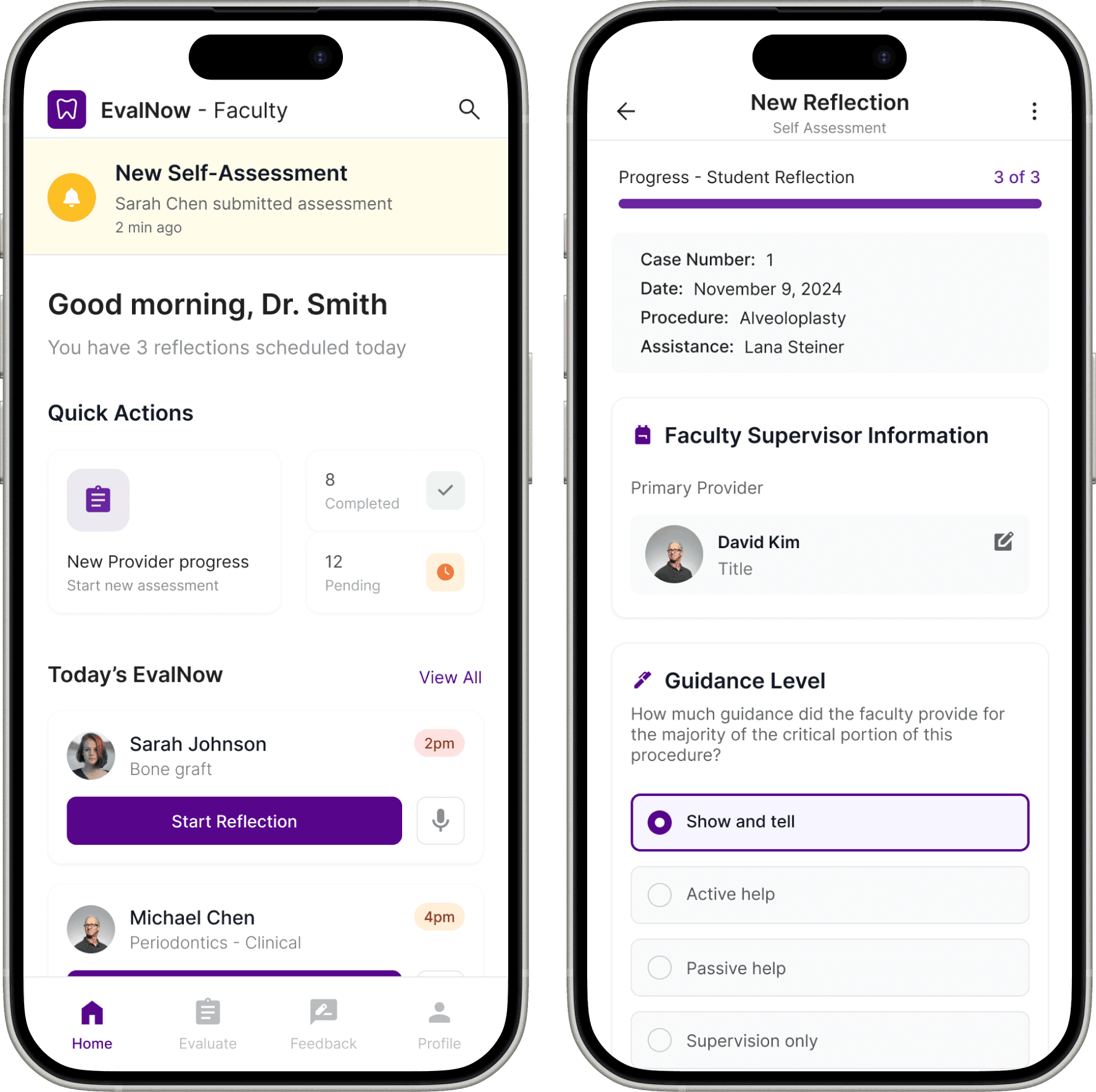
Clinical feedback mobile app for denists and faculty.
Enterprise Client Design
Medical Technology
Mobile